Crime & Law
Feds Seek Nearly 6 Years in Prison For Madigan’s ‘Henchman’ Mike McClain
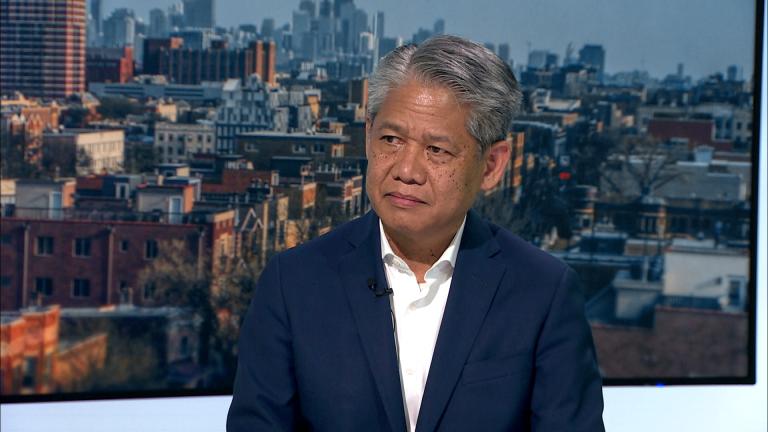
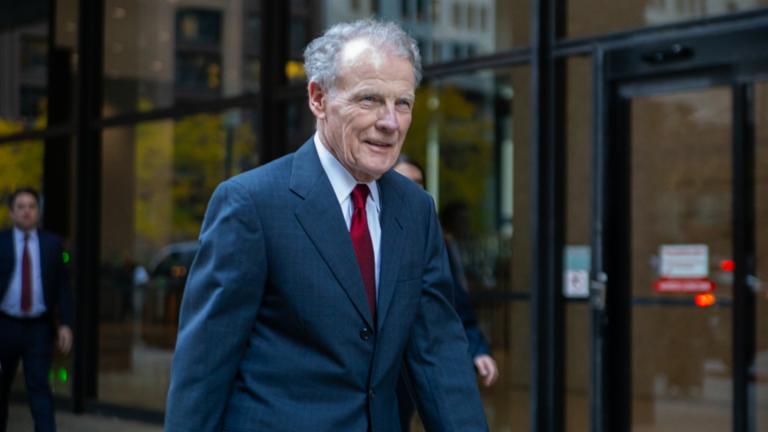
 Ex-lobbyist Mike McClain, left, longtime confidant to former House Speaker Michael Madigan, right, are pictured in previous appearances at the Dirksen Federal Courthouse in Chicago in relation to their public corruption trials. (Andrew Adams / Capitol News Illinois)
Federal prosecutors are seeking a prison term of nearly six years for Michael McClain for his role in conspiring to bribe one of his closest friends and allies — former Illinois House Speaker Michael Madigan — while his defense team claims there’s a “strong likelihood” he would not survive any time in prison.
McClain, 77, a former Illinois representative and longtime lobbyist for Commonwealth Edison, was convicted of bribery conspiracy and willfully falsifying the utility giant’s books as part of the “ComEd Four” trial in 2023.
Prosecutors, who have described McClain as Madigan’s longtime right-hand man and loyal soldier, now say he should serve 70 months in prison.
“But, while McClain worked as a lobbyist, McClain was not Madigan’s lobbyist, and Madigan was not McClain’s lobbying client,” Assistant U.S. Attorney Sarah Streicker wrote in the government’s sentencing memo. “McClain acted as Madigan’s agent, messenger, henchman, power and reputation protector, advisor, and supporter.”
McClain was convicted alongside former ComEd CEO Anne Pramaggiore, ex-ComEd consultant Jay Doherty and former ComEd exec John Hooker. Prosecutors alleged they plotted to give “a continuous stream of benefits” to “corruptly influence and reward Madigan” in order to get his support on Springfield legislation that would be massively beneficial to ComEd.
The four did so by arranging for ComEd to pay $1.3 million to Madigan allies who were hired as subcontractors, but who actually did little or no work for the utility company. Rather than paying them directly, prosecutors said Hooker and others arranged for them to be paid through an intermediary — Doherty — in an effort to conceal the payments.
Madigan himself was convicted at a separate trial earlier this year and was sentenced in June to more than seven years in prison. While McClain was also a defendant in that trial, that jury failed to convict him on any additional counts.
Already prosecutors have recommended prison sentences of 56 months for Hooker and 70 months for Pramaggiore.
Prosecutors said McClain’s “unique positioning” with Madigan and ComEd was key to the nearly decade-long conspiracy. McClain had been friends with the speaker for decades dating back to his own time in the Illinois legislature and “enthusiastically acted as the go-between” for Madigan and ComEd, according to prosecutors.
ComEd officials testified McClain was seen as a “double agent” because while he was loyal to the utility company, it was known within ComEd circles that McClain was even more loyal to Madigan.
McClain’s defense attorney Patrick Cotter has long argued that McClain did nothing more than legal lobbying. Cotter has said McClain simply passed along job recommendations from Madigan to ComEd and has claimed there’s no evidence proving there was any intent by McClain to exchange jobs for official action from Madigan in a “this-for-that” exchange.
“Doing so was legal and constitutionally protected lobbying,” Cotter wrote in his own sentencing memo. “It should not have been treated as a crime, under 18 U.S.C. § 666, or any other federal statute.”
Cotter claimed that McClain should be sentenced to two years of probation, sparing him from a multiyear prison term he may not live to complete.
“Such a sentence recognizes the seriousness of the crimes for which Mr. McClain was convicted,” Cotter wrote in recommending probation, “but avoids the strong likelihood that, if incarcerated, he will suffer seriously and unnecessarily from his deteriorating health situation or even die alone in prison, separated from his family and loved ones.”